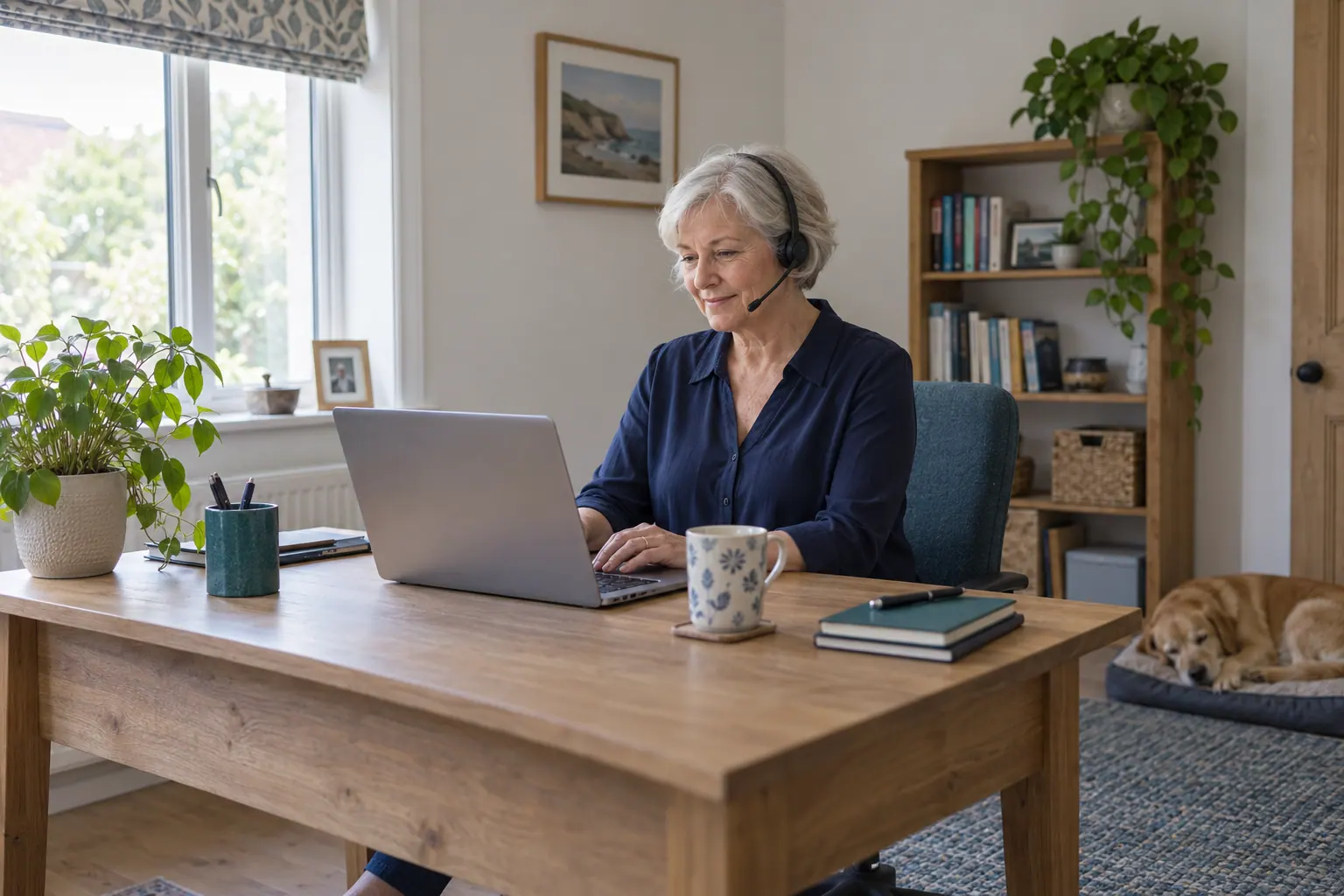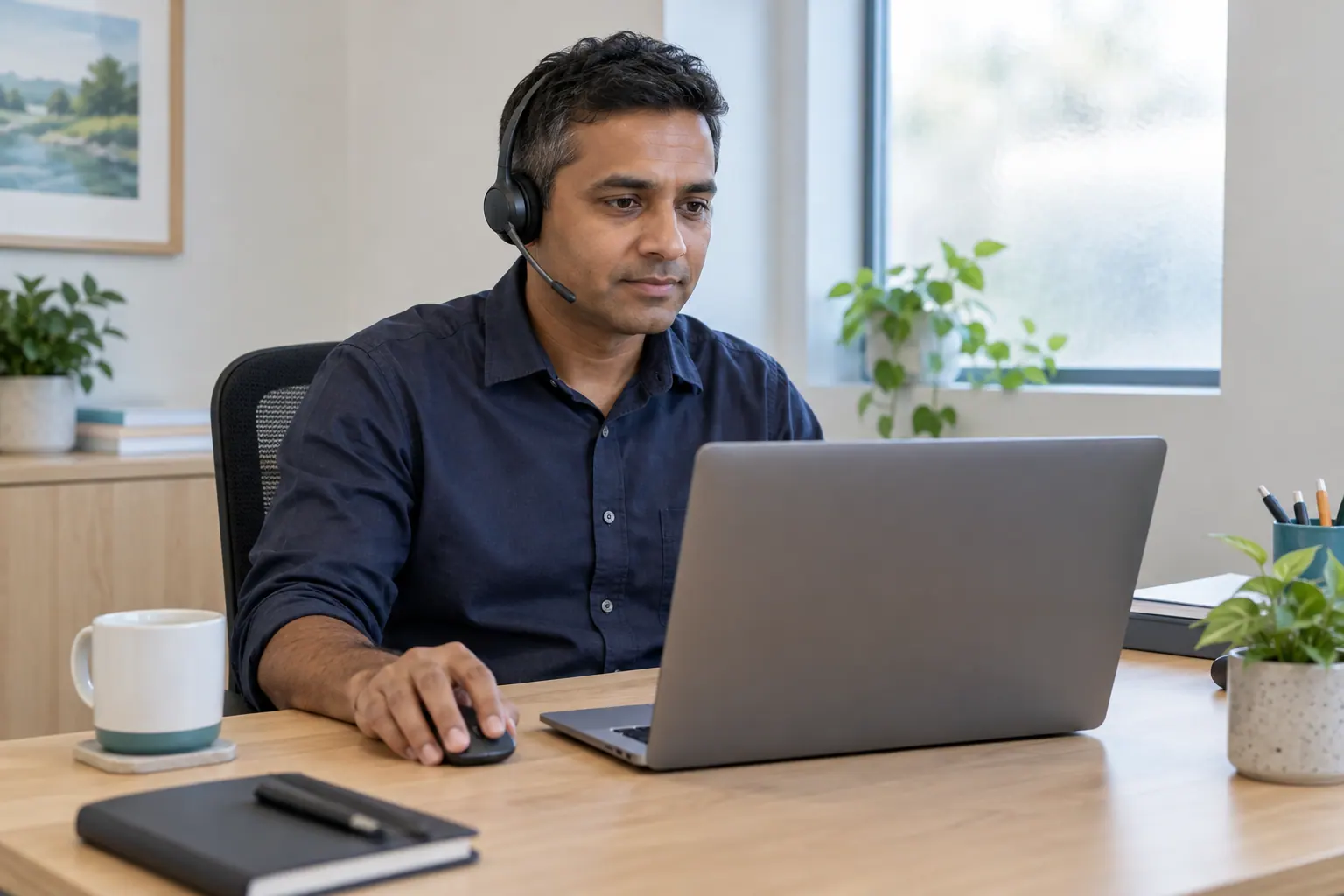
The NHS has committed to reach net zero, and travel is part of that plan. Remote locum sessions are one way a practice can cut the miles behind its cover, but they are not automatically greener. Working from home uses energy too.
This guide shows when remote cover saves carbon, how to estimate it with official figures and how to describe it without overclaiming. The choice to use remote cover still starts with whether the work suits it.
Why travel is part of the NHS net zero plan
NHS England has set two targets: net zero by 2040 for the emissions the NHS controls directly, and by 2045 for the wider footprint it can influence, which includes staff commuting and patient travel. The Health and Care Act 2022 put this commitment on a legal footing.
NHS England estimates staff commuting at about 560,000 tonnes of CO2e a year, with most journeys made alone by car. Its travel strategy aims to halve staff travel emissions by 2033 and lists removing the need to travel, for example through digital communication, among the ways to get there. Integrated care boards are expected to include sustainable travel in their green plans.
Sources: NHS England: Delivering a net zero NHS (July 2022) · NHS England: Net Zero travel and transport strategy (2023)
When a remote session actually saves carbon
The UK government publishes conversion factors for carbon reporting. In the 2026 set, an average car emits about 0.166 kg CO2e per kilometre. Working from home adds about 0.324 kg CO2e per hour for heating and equipment, or about 2.59 kg for an eight-hour day.
So a remote day saves carbon only when the car journey it replaces is long enough. For an eight-hour day the break-even round trip is about 16 km (10 miles); for a four-hour session it is about 8 km (5 miles). If the locum would have walked, cycled or taken the train, the saving is smaller and may disappear.
| Round trip by average car | Car journey | Remote day | Difference |
|---|---|---|---|
| 10 km (6 miles) | 1.66 kg CO2e | 2.59 kg CO2e | Remote adds 0.93 kg |
| 20 km (12 miles) | 3.32 kg CO2e | 2.59 kg CO2e | Remote saves 0.73 kg |
| 40 km (25 miles) | 6.64 kg CO2e | 2.59 kg CO2e | Remote saves 4.04 kg |
| 80 km (50 miles) | 13.27 kg CO2e | 2.59 kg CO2e | Remote saves 10.68 kg |
Sources: GOV.UK: greenhouse gas reporting conversion factors 2026
Match remote sessions to work that suits them
NHS England’s travel strategy is clear that much NHS care has to be delivered in person. Carbon can be a good reason to look for remote opportunities, but work that needs an examination, a procedure or a vaccination stays in person.
Remote sessions suit defined work such as results, letters, telephone and video consultations and medication reviews, with an agreed route back to the practice for anything that needs an in-person assessment. The GMC’s professional standards apply to remote consultations in the same way as face-to-face care.
Sources: NHS England: Net Zero travel and transport strategy (2023) · GMC: remote consultations
| Shift | Day | Status |
|---|---|---|
| Locum GP, morning | Monday | 2 applied |
| Practice nurse | Tuesday | Offered |
| Clinical pharmacist | Wednesday | Booked |
Record the saving honestly
If your practice or PCN reports on carbon, record each remote session with the locum’s usual round trip and mode of travel, the hours worked and the year of the factors used. Ask the locum how they would normally travel; a guessed journey makes the figure unreliable. The free estimate sheet does the arithmetic.
Describe the result as an estimate of travel emissions avoided, with the method. Avoid words such as “carbon neutral” or “carbon positive”: the government’s Green claims code expects environmental claims to be truthful, accurate and backed by evidence, and a remote session still has a footprint.
Sources: GOV.UK: Green claims code · GOV.UK: greenhouse gas reporting conversion factors 2026
Use a mix of remote and on-site days
Cover does not have to be all remote or all on-site. A hybrid pattern can keep hands-on clinics on site and move defined desk-based work to remote days. Where a locum lives a long way from the practice, those remote days are where most of the saving comes from.
Patient travel also sits within the NHS’s wider footprint. Where a remote consultation is clinically suitable, it can save a patient’s journey as well as the clinician’s.
Common questions
Is remote locum cover carbon neutral?
No. Working from home uses energy for heating and equipment, and the government’s conversion factors include it. Remote cover reduces emissions only when it replaces a long enough car journey.
Which figures should we use for our estimate?
Use the latest UK government greenhouse gas conversion factors and record which year you used. This guide uses the 2026 average car and homeworking factors.
Should carbon decide whether a session is remote?
No. Decide first whether the work can safely be done remotely with the right access and support. Carbon is a benefit worth recording, but it comes second to that clinical decision.
Official sources
Sources checked . Requirements can differ by country, employer and role; use the current guidance relevant to the work.
Published by FindALocum. How we prepare our articles · Suggest a correction