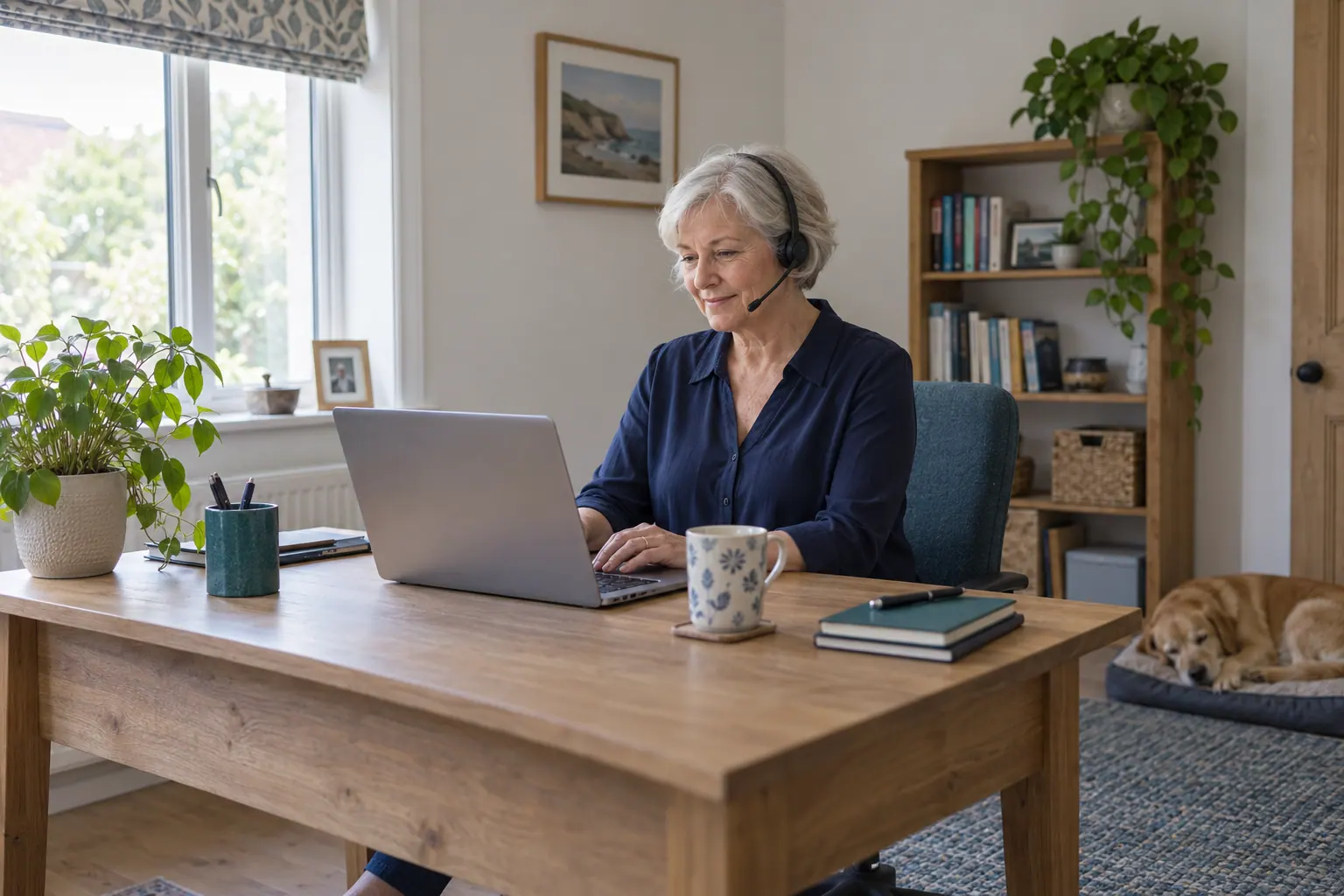
Locum work can mean long drives to practices you do not usually work at. Remote sessions remove some of that driving, which saves time and carbon, but working from home has its own footprint.
This guide uses the UK government’s 2026 carbon figures to show what your commute produces and when remote work genuinely reduces it.
Work out what your commute produces
The 2026 government conversion factors put an average car at about 0.166 kg CO2e per kilometre. Working from home adds about 0.324 kg CO2e per hour for heating and equipment.
Take a locum who swaps two on-site days a week, each with a 50 km round trip, for remote days over 44 weeks. The 88 avoided journeys come to 4,400 km, or about 730 kg CO2e. Eight-hour remote days on those dates add about 228 kg. The net saving is roughly 500 kg CO2e a year.
Sources: GOV.UK: greenhouse gas reporting conversion factors 2026
When remote work is not the greener choice
For an eight-hour day, remote work saves carbon only when the car round trip it replaces is longer than about 16 km (10 miles). If you would otherwise walk, cycle or take the train, or your commute is short, a remote day may produce more than it saves.
Heating is most of the home-working figure. Heating only the room you work in keeps that part down.
Sources: GOV.UK: greenhouse gas reporting conversion factors 2026
Plan a lower-travel mix of sessions
NHS England notes that much NHS care has to be delivered in person, so most locums will keep some on-site work. Choose on-site sessions you can reach without a long drive, group them at one site where you can, and take remote sessions for the practices furthest away.
Remote work comes with the same professional standards as face-to-face care. Agree the duties, system access, local support and the route for patients who need to be seen in person before you accept a remote session.
Sources: NHS England: Net Zero travel and transport strategy (2023) · GMC: remote consultations
Tell practices how you travel
When you register, give your usual journey and how you travel, as well as your preferred areas. A practice reporting on its carbon footprint can then use your real journey to estimate the travel your remote sessions avoid.
Keep the claim modest. Remote work reduces your travel emissions when the journey is long enough; it does not make your work carbon neutral.
Sources: GOV.UK: Green claims code
Common questions
Does remote work always cut my emissions?
No. It depends on how far you would otherwise drive. For a full day by average car, the break-even round trip is about 16 km using the 2026 government factors.
Can I combine remote and on-site sessions?
Yes. Say which days you can attend in person, which areas you can reach and which work you can do remotely. Each booking still needs its own agreed duties and support.
Do I need special equipment for remote sessions?
Agree it with the practice before the first session. Some practices provide equipment and others specify what you need. Check confidentiality and connection requirements too.
Official sources
Sources checked . Requirements can differ by country, employer and role; use the current guidance relevant to the work.
Published by FindALocum. How we prepare our articles · Suggest a correction